
Stones · 6 min read
Jade meaning: love, protection, and the stone people keep
What jade symbolises across Chinese, Māori, and Mesoamerican traditions — and how to wear it for love, protection, luck, and strength.
By Tulinh Tran ·
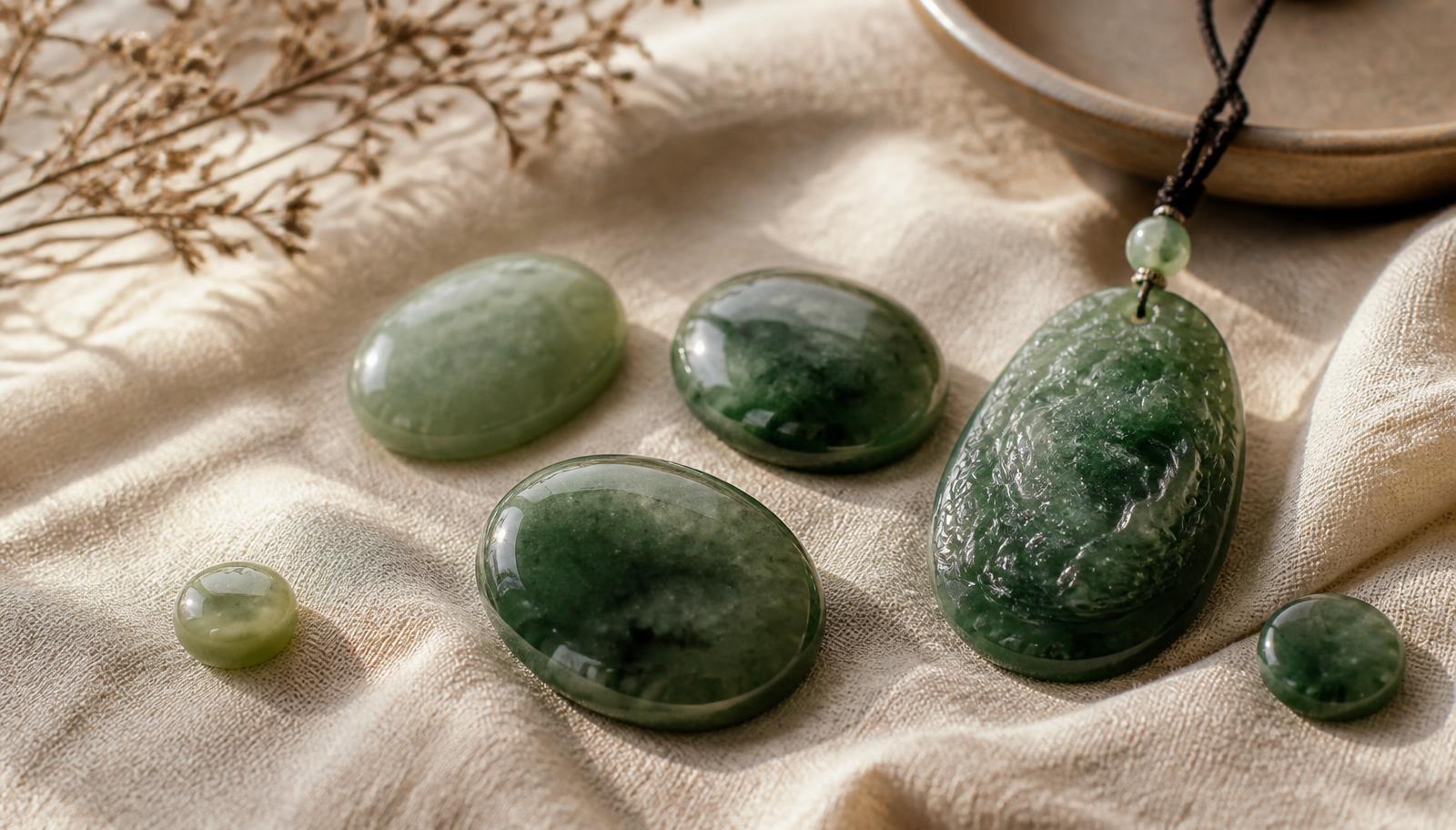
A stone valued for meaning before beauty
Jade was never valued for sparkle. It barely refracts light at all. What it does is survive handling, and cultures that found it tended to read that durability as a moral quality rather than a physical one.
In China, jade — yu — was the stone of virtue: benevolence in its warmth, integrity in its hardness, honesty in its translucency. Confucius listed those correspondences explicitly. In Aotearoa, pounamu was passed down as a taonga, a treasure carrying the mana of everyone who had worn it. In Mesoamerica, jade was buried with the dead and valued above gold.
These traditions had no contact with each other, and they all landed on the same use for the stone: keep it, then hand it on.
Jade meaning by intention
Love. Jade at the heart is the oldest gift of constancy — worn for love that steadies rather than dazzles, and given at unions and births.
Protection. The jade bangle is the guardian form. Placed on the wrist in childhood and worn for life, a bangle that cracks is said to have taken the harm meant for its wearer.
Luck and prosperity. Merchants carried jade because fortune, in these traditions, follows patience and attention rather than chance.
Strength. Jade is the toughest common gemstone. Its interlocking crystals resist breaking rather than scratching — resilience rather than rigidity.
How to tell natural jade from treated jade
Most jade sold today is treated: bleached with acid and impregnated with polymer (B-jade), or dyed (C-jade). Treated stones look uniform, feel slightly warm and plasticky, and degrade over years.
Natural, untreated jade — A-jade — has uneven colour, visible fibrous texture under light, and a cool, dense feel. Ask sellers directly whether the stone is untreated, and ask what documentation exists. Every jade stone we set is natural and untreated.
Caring for jade
Rinse in lukewarm water, dry with a soft cloth, and wear it. Avoid ultrasonic cleaners, solvents, and prolonged heat. Jade improves with skin contact — over years it takes on a softer surface that only comes from being worn.